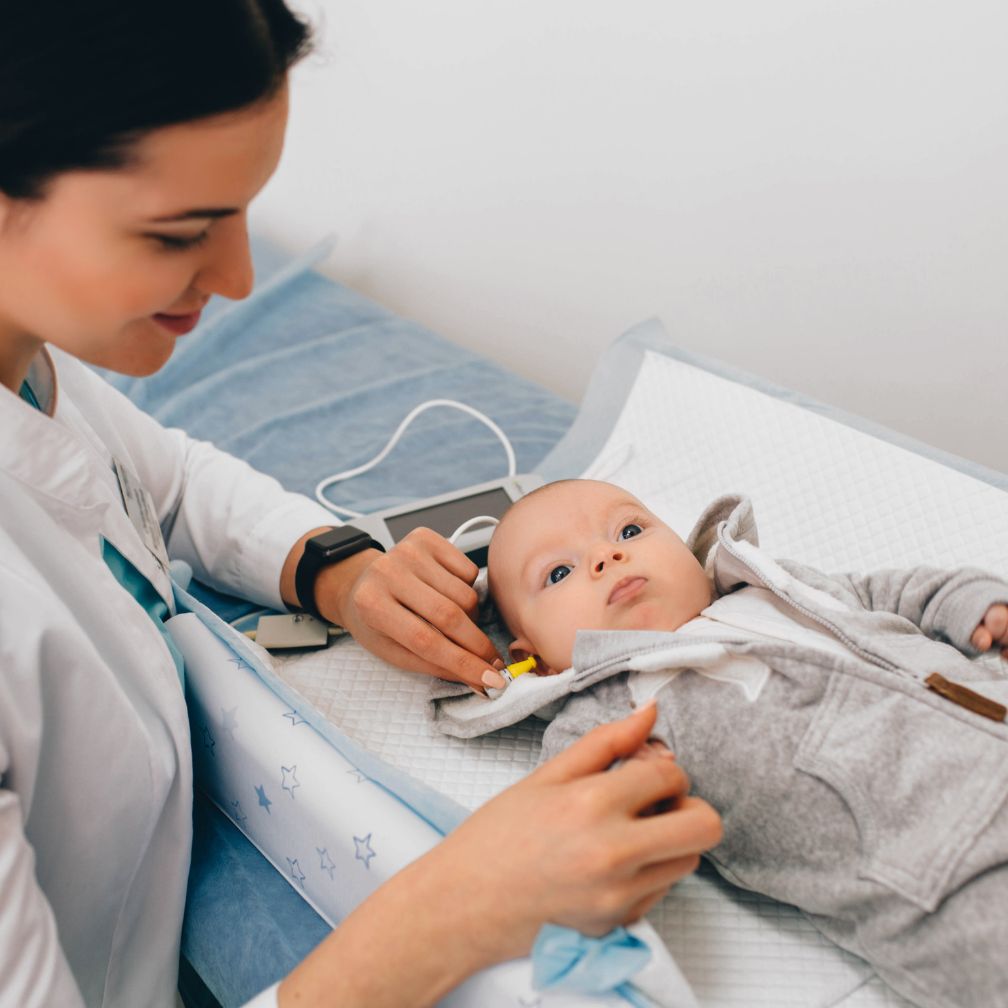
For parents of newborns, discovering their infant faces auditory loss will feel overwhelming and disheartening. But the positive fact is that because of prompt medical testing and early intervention, young children with hearing deficits are positioned to thrive. Truly, these infants routinely acquire language proficiency, interpersonal skills, and deep relationships with those around them, building toward a prosperous life!
Combining traditional hearing devices with specialized cochlear technology delivers two outstanding solutions for assisting infants who exhibit hearing loss. In the upcoming breakdown, we dissect their primary mechanics and detail how to pick the proper device for your child.
Unpacking the Foundations of Infant Hearing Loss
Hearing deficits among babies can originate from diverse medical influences, including:
- Spontaneous genetic mutations (even within bloodlines having zero history of impairment)
- Targeted in-utero viral infections including cytomegalovirus (CMV) and rubella
- Unexpected labor complications, featuring perinatal hypoxia or premature delivery
- Select therapeutic drugs administered within hospital neonatal intensive units
Which measure offers the greatest impact? Immediate objective assessment. Given these guidelines, newborns cared for in United States nurseries receive auditory evaluations prior to heading home. Specialized pediatric auditory doctors enforce the standard “1-3-6” diagnostic framework:
- Screened prior to 1 month
- Formal medical diagnosis secured before 90 days of life
- Targeted intervention (incorporating wearable devices or care) started within 6 months of age
Achieving these explicit timeline goals offers infants optimal opportunities for strong speech, verbal communication, and neurological growth. If you need guidance on these screenings, your primary pediatrician stands ready to assist you!
Deploying Hearing Aids for Newborns
In supporting babies who exhibit mild to severe hearing deficits, personal hearing aids regularly act as the initial care standard. These tiny, wearable hearing tools amplify acoustic signals, helping infants perceive spoken dialogue and surrounding sounds with greater clarity.
Custom infant-adapted hearing aids act as:
- Fully safe and comfortable for infants aged just a few weeks
- Constructed using pliable, gentle custom molds that change as the child grows
- Designed with secure, tamper-resistant battery latches and child-focused protective mechanisms
- Precisely tuned by a certified pediatric audiologist to target your infant’s unique hearing profile
Throughout early childhood growth, hearing instruments necessitate frequent maintenance to guarantee ideal ear-canal fit and maximum performance.
Cochlear Implants for Infants
When an infant presents with severe to profound sensorineural hearing deficits and derives limited success from conventional hearing aids, clinical teams frequently recommend a cochlear implant. In contrast to traditional hearing aids, cochlear implant systems:
- Entail precision surgical insertion inside the inner ear to connect with the auditory nerve
- Bypass damaged parts within the auditory system
- Convert acoustic waves into direct electrical signals that stimulate the auditory nerve directly
Dedicated pediatric cochlear devices serve as:
- Granted official FDA clearance for young patients reaching 9-12 months of age
- Highly effective when supported through early therapy programs and dedicated household support
- Recommended only after thorough diagnostic testing by a pediatric audiology clinician and an ENT physician
That pre-surgical path incorporates diagnostic imaging, specialized auditory testing, and in-depth discussions surrounding achievable long-term goals.
Hearing Aids vs. Cochlear Implants: What’s the Difference?
- Mild to severe hearing loss relies on Hearing Aids; Severe to profound hearing loss: Cochlear Implants
- Non-Invasive external placement: Hearing Aids; Surgical insertion required: Cochlear Implants
- Physical sound amplification: Hearing Aids; Direct conversion to electrical signals: Cochlear Implants
- Starts at Infancy: Hearing Aids; Procedure starts at 9-12 months: Cochlear Implants
Final Takeaways: Navigating Infant Hearing Solutions
When your child is diagnosed with auditory deficits, you possess multiple viable options and robust community resources exist to help you. By partnering with skilled pediatric auditory specialists, countless infants successfully cultivate language capabilities completely equal to their hearing peers.
No matter if your infant proves better suited for conventional hearing aids or advanced cochlear implants, prompt intervention delivers permanent lifelong benefits.
Have questions about your baby’s hearing health? Contact our staff today for a complete diagnostic review and tailor-made care roadmap.