For individuals who deal with tinnitus, air travel can be a source of stress, as the flight might intensify their ear discomfort, enhancing the usual pre-trip anxieties about reaching their final destination. The boosted noise inside the airplane, fluctuations in air pressure, and the anxiety associated with flying can all result in a worsening or more bothersome experience of tinnitus. Luckily, understanding how flying impacts your ears and learning ways to prepare can make your next trip far more manageable.
What is tinnitus and why does it flare up in the air?
Tinnitus is the apprehension of sound without any external source. Some individuals experience a continuous ringing sound, while others perceive buzzing, clicking, whooshing, or static noises.
While tinnitus on its own isn’t a disease, it’s frequently a symptom of an underlying health concerns including:
- Hearing Loss: Traumatic head injuries or extended exposure to excessive sound levels can harm the fragile structures of the inner ear.
- Blockages or Infection: Tinnitus can be triggered or intensified by fluid accumulation and infections in the ears.
- Ototoxic Medications: Certain medications can harm the inner ear, leading to or aggravating symptoms.
- Benign Tumors: Acoustic neuromas are benign tumors that can affect both hearing and balance.
Tinnitus could be subjective (heard only by the patient) or objective (audible to a clinician through a stethoscope-like device). When flying, several variables can intensify the symptoms, making travel more unpleasant for those impacted.
Comprehending airplane ear and its link to tinnitus
The term “airplane ear” refers to the feeling of ears being full, under pressure, or experiencing dulled hearing while flying. The issue arises when the eustachian tubes, in charge of sustaining ear pressure, have trouble adjusting to going up or down. Inadequate opening of these tubes might cause pressure differences to arise, resulting in discomfort or pain.
Individuals experiencing tinnitus may find that this pressure inconsistency exacerbates their existing symptoms or triggers additional ones. The stress and sensory stimulation of air travel can exacerbate the issue.
Why flying can exacerbate tinnitus symptoms
A number of elements of air travel may intensify tinnitus:
- Loud jet engine noise within the plane can be especially irritating near the engines, potentially aggravating sensitive ears and intensifying existing ringing in the ears, or tinnitus.
- Pressure Changes: During takeoff and landing, the rapid shifts in cabin pressure can affect how the eardrum and surrounding structures vibrate, which might activate or heighten tinnitus.
- Travel-related anxiety, combined with not enough rest or insufficient hydration, can intensify the sensation of tinnitus, making it seem more pronounced and bothersome.
Travel tips for decreasing tinnitus discomfort mid-flight
By working a few easy precautions into your flight routine, you can substantially reduce the discomfort and pressure in your ears during air travel.
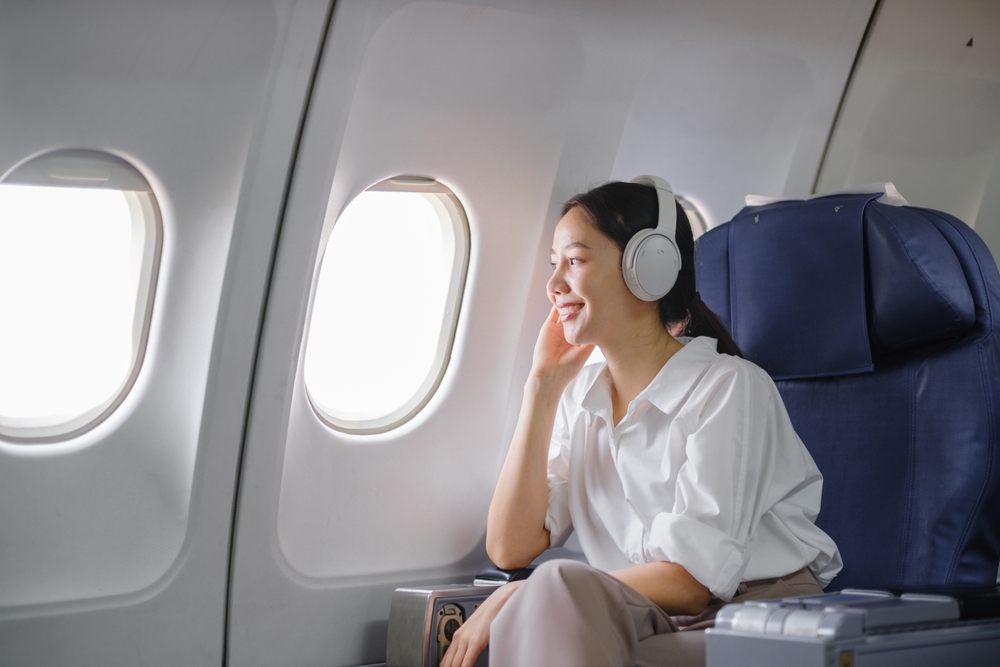
- Use Noise-Canceling Headphones: These can considerably decrease ambient engine noise, particularly during takeoff and landing. They also allow you to listen to relaxing music or white noise, which can mask tinnitus.
- Select a strategic seating choice: If possible, select a seat towards the front of the plane rather than near the engines. This area is generally calmer and better suited for a relaxing journey.
- Avoid Basic Earplugs: Though tempting, traditional earplugs may increase inner ear pressure, making symptoms more severe. As an alternative, try ear pressure-regulating earplugs made specifically for air travel.
- Chew Gum or Swallow Regularly: These actions help keep the eustachian tubes open, allowing pressure to equalize more effectively.
- Use a Decongestant: Think about taking a decongestant, either in oral or nasal form, before your flight if your doctor recommends it. This can help alleviate nasal congestion and allergies, potentially preventing any blockages in the eustachian tubes.
- Stay Awake during Takeoff and Landing: Being awake helps your body naturally regulate pressure. Resting at these times may decrease the chances of achieving proper pressure balance.
Strategies for remaining relaxed and entertained during a flight
Distraction is a powerful tool for managing tinnitus. Bring entertainment options like audiobooks, soothing playlists, or puzzles to keep your focus elsewhere. Meditation apps and breathing exercises can also help alleviate flight-related anxiety and lessen your awareness of tinnitus.
Before your trip, aim to get quality sleep and stay hydrated. Avoiding caffeine or alcohol on travel day can also reduce ear-related symptoms. And if you use hearing aids, don’t hesitate to use them on the plane– they may help you hear more naturally, decreasing the dominance of the internal ringing or buzzing.
Get professional guidance if tinnitus interferes with travel
If you regularly experience discomfort while flying due to tinnitus, it is advisable to get advice from a professional in hearing health. A detailed assessment can identify the underlying reason for your tinnitus and result in specific recommendations, such as individualized coping techniques or treatment plans, to better manage instances of increased symptoms.
Set up an assessment for your tinnitus symptoms today.